

close
Choose Your Site
Global
Social Media
Views: 0 Author: Site Editor Publish Time: 2026-08-07 Origin: Site


Passive fire protection in dynamic building gaps presents a unique engineering challenge. The system must remain highly flexible during daily operations but completely impenetrable during a fire event. Specifying an untested or improperly rated joint assembly exposes projects to severe compliance failures, failed inspections, and catastrophic liability. A joint that accommodates movement but fails under thermal stress compromises the entire fire compartment. Mitigating this risk requires strict adherence to accredited testing standards. This guide breaks down the specific system tests, evaluation frameworks, and implementation realities required to confidently specify a compliant Fire Rated Wall Expansion Joint. We will examine the exact mechanics of UL 2079, the limitations of various substrates, and the field conditions that dictate whether a specified assembly will actually perform when exposed to extreme heat and structural deflection.
Dual-Performance Mandate: A true fire rated wall expansion joint must pass rigorous cyclic movement testing before being subjected to fire endurance and hose stream tests.
Standard Dominance: UL 2079 and ASTM E1966 are the non-negotiable baseline standards for evaluating fire-resistive joint systems in North America, with certification listings maintained by accredited bodies like Underwriters Laboratories (UL) and Intertek Warnock-Hersey.
Material Limitations: The performance of specific assemblies—such as an aluminum alloy wall expansion joint or a rubber inserted flush wall joint—depends heavily on the tested substrate (e.g., concrete, masonry, or wood frame).
Field vs. Lab Discrepancy: Most compliance failures occur not due to product design, but because the field installation deviates from the strict parameters of the manufacturer’s third-party tested assembly or fails to utilize certified firestop installers.
Defining the baseline requirements for compartmentalization, smoke containment, and structural integrity in wall assemblies is essential for passive fire protection. The movement paradox highlights the inherent conflict between a Wall Deformation Joint, which requires flexibility for seismic, thermal, and wind-sway movement, and a fire barrier, which requires rigid, gapless containment. When a building shifts, the joints expand and contract. If the firestop material inside that joint cannot handle the shear or lateral movement, it tears. Once torn, the fire barrier is broken.
Relying on component-level fire ratings rather than system-level assembly testing creates significant liability. If a sealant is rated but the entire assembly is untested, the system may fail catastrophically under thermal stress. Fire does not attack a single component; it attacks the entire gap. The substrate, the anchors, the backing material, and the sealant all react differently to heat. Concrete might spall, metal anchors might conduct heat, and sealants might degrade. System-level testing ensures these components work together to maintain the barrier.
Contractors often face situations where the specified joint does not match the field conditions. A common error involves using a standard joint cover and simply packing the void with mineral wool and fire caulk. This field-devised solution lacks empirical testing. During a fire, the metal cover warps, pulling the caulking away from the substrate and opening a direct path for smoke and flames. Proper specification requires selecting an assembly tested exactly as it will be installed.
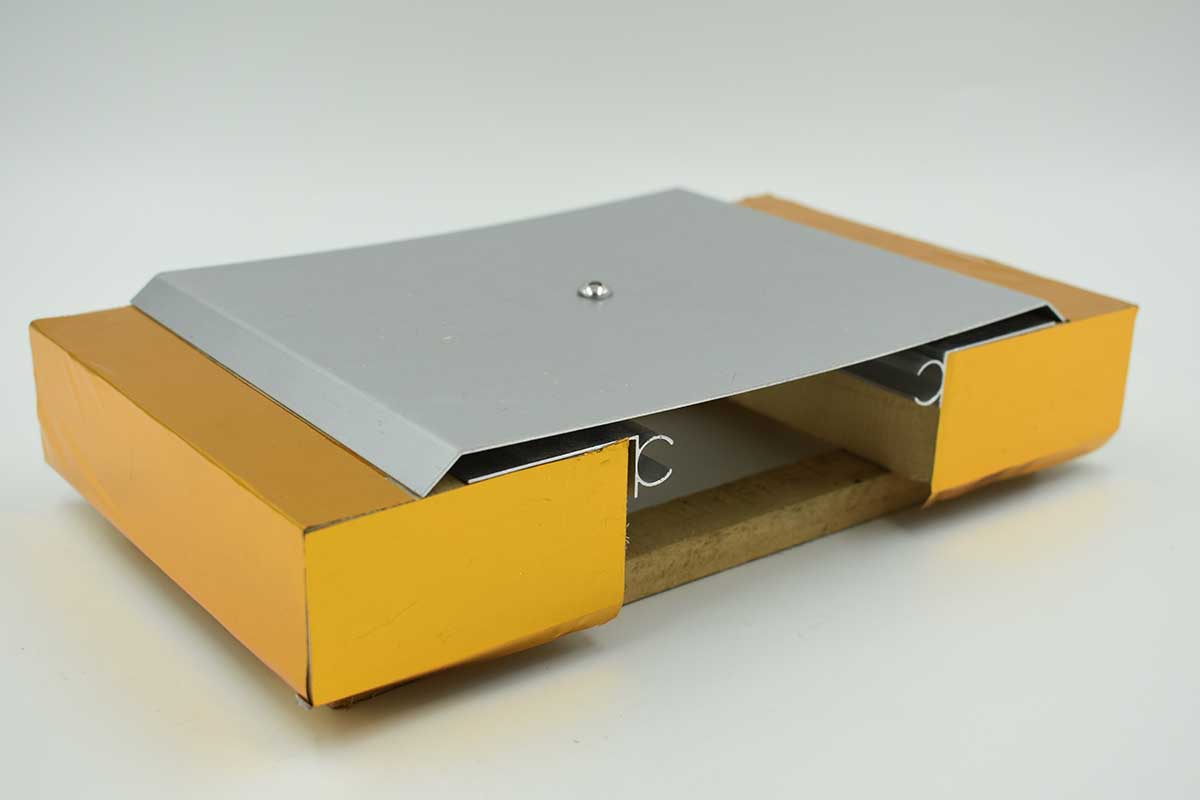
UL 2079 forces the joint through thousands of expansion and contraction cycles prior to fire exposure to simulate end-of-life conditions. This cyclic testing is brutal. It proves the material will not fatigue, sag, or detach from the substrate after years of building movement. Only after surviving this mechanical torture does the assembly face the furnace.
Fire endurance testing evaluates time-temperature curve requirements for 1-hour, 2-hour, or 3-hour ratings, along with heat transfer limitations. The unexposed side of the wall cannot exceed specific temperature thresholds. If the joint allows too much heat to pass through, combustible materials on the non-fire side could ignite, rendering the barrier useless even if flames do not penetrate.
The hose stream test evaluates the structural integrity of the charred assembly against high-pressure water impact. Firefighters use high-pressure hoses that can easily punch through weakened materials. The joint must withstand this physical impact immediately after the fire endurance test. Air leakage (L-Rating) and water resistance (W-Rating) measure the system's ability to restrict the passage of cold smoke, gases, and water before and after cycle testing.
Comparing ASTM E1966 to UL 2079 reveals that this standard evaluates the joint's ability to prevent the passage of flame and hot gases through the wall gap. It provides a foundational testing methodology for fire-resistive joint systems. Specifiers use this standard to understand the baseline performance metrics required for compliance.
This prerequisite testing establishes baseline movement capabilities for building expansion and contraction. It defines Class I, II, III, or IV movement capabilities before fire testing begins. Understanding the movement class ensures the selected joint matches the structural engineer's calculated building drift and thermal expansion metrics.
These systems feature factory-compressed, infused foam that expands in the joint, featuring an integrated bellows-type silicone face. They are highly reliable for water tightness, sound attenuation, and thermal insulation. The intumescent nature of the foam means it expands when exposed to heat, actively sealing the gap tighter during a fire.
Installation requires precise measurement and handling. The foam expands quickly once released from its packaging, requiring installers to work efficiently to position the material before it locks into place. When installed correctly, these systems often achieve a fire-rating without requiring a separate mechanical coverplate.
Flexible ceramic or intumescent blankets are hung within the joint cavity, paired with surface-mounted covers. They are suitable for very wide joints but require mechanical anchoring and precise field splicing. The blanket acts as the primary firestop, while the cover provides the architectural finish and traffic surface.
Verify the joint width and substrate condition.
Install the mechanical anchors at the specified spacing.
Drape the fire blanket into the joint, ensuring proper slack for movement.
Splice the blanket sections using manufacturer-approved high-temperature foil tape or overlapping techniques.
Install the surface cover plate.
Wet sealant is applied over a non-combustible backer material in the joint gap. This is cost-effective for low-movement joints but highly dependent on flawless field installation and joint-depth ratios. The installer must tool the sealant to the exact depth specified in the UL listing.
Evaluating how an Aluminum Alloy Wall Expansion Joint performs under extreme thermal stress is critical. Metal coverplates protect underlying intumescent or fire blanket materials. Testing ensures metal anchors do not create thermal bridging that fails the temperature transmission criteria of UL 2079. If the metal conducts too much heat to the unexposed side, the system fails.
Engineers must account for the expansion of the aluminum itself. During a fire, the metal cover will expand and potentially warp. The underlying fire barrier must be designed to remain intact even if the cover plate distorts or detaches completely.
A Rubber Inserted Flush Wall Joint balances architectural aesthetics with life safety. Testing evaluates the burn-off rate of elastomeric inserts and the activation time of the underlying fire blanket or pre-compressed intumescent foam. The rubber insert is expected to melt or burn away; the critical factor is that the firestop beneath it activates fast enough to seal the void.
An Exterior Wall Movement Joint System requires dual-purpose testing for weatherproofing and fire resistance. UV degradation, freeze-thaw cycles, and moisture exposure impact the long-term viability of fire-rated components. If the fire barrier absorbs water, its intumescent properties may be compromised, leading to failure during a fire event.
Specifying a joint tested only in concrete for a wood-frame project presents a severe risk. Wood-frame floor and wall assemblies require specific systems to accommodate wood shrinkage, frame deflection, and substrate combustibility. Verify the specific UL/Intertek listing matches the exact wall construction type and thickness. A system that passes in an 8-inch concrete wall will likely fail in a 6-inch steel stud wall.
Fire testing is typically conducted on straight, continuous joint runs. Field installations require tees, crosses, and wall-to-floor transitions. Mandate factory-fabricated transition pieces that maintain the continuity of the fire-rated assembly. Field-cutting and piecing together fire blankets at a 90-degree corner often leaves microscopic gaps that fire will exploit.
Improper depth-to-width ratios, incorrect fastener spacing, or substituting unapproved sealants voids the tested rating. Require installation by FCIA-member contractors or installers certified under the FM 4991 or UL Qualified Firestop Contractor Program. Inspectors will look for the specific UL design number and verify that the installed materials match the listing exactly.
Map local building codes directly to required test standards like UL 2079 or ASTM E1966. Weigh installation speed and labor costs against material costs and movement capacity when comparing pre-compressed intumescent foam versus mechanical fire blankets. Consider trade-offs between concealed joints and high-movement surface-mounted covers.
Use a step-by-step framework to verify third-party testing directories before approving submittals. Ensure the selected assembly meets all project specifications and compliance requirements. Check the movement class, the hourly rating, and the approved substrates.
System Type | Primary Advantage | Key Limitation | Best Application |
|---|---|---|---|
Pre-Compressed Foam | No mechanical cover required | Limited to specific joint widths | Interior masonry walls |
Fire Blanket with Cover | High movement capacity | Requires precise field splicing | Seismic expansion joints |
Elastomeric Sealant | Cost-effective for low movement | Highly dependent on installation skill | Static control joints |
A fire rated wall expansion joint is only as reliable as the specific, system-level tests it has passed. Component-level claims are insufficient for life safety. Prioritize manufacturers that provide transparent, easily accessible UL 2079 or ASTM E1966 listings that perfectly match your project's substrate, joint width, and movement requirements.
Cross-reference architectural details with manufacturer CAD drawings to ensure compatibility.
Verify third-party testing certificates directly through the UL Product iQ or Intertek directories.
Consult with a fire protection engineer for complex transitions and directional changes.
Mandate factory-fabricated transition pieces in the project specifications.
A: Both test for fire resistance and movement. UL 2079 is the most widely referenced standard in North American building codes, while ASTM E1966 provides the foundational test methodology. UL 2079 includes specific criteria for hose stream tests and cyclic movement that dictate compliance.
A: No. Field-modifying non-rated joints with fire caulking voids compliance. Systems must be tested as a complete assembly. Adding firestop material to an untested cover plate does not create a UL-listed assembly and will fail inspection.
A: While fire test standards are the same, exterior joints must also pass separate environmental tests. The fire-rated components must be protected from moisture, UV exposure, and freeze-thaw cycles to ensure they perform during a fire event.
A: No. Metal does not equal fire-rated. The metal cover is just one component; the underlying barrier provides the actual UL-tested rating. The metal cover alone will warp and allow fire to pass through the gap.
A: Joints are tested at their maximum expanded width to ensure the fire barrier remains intact even when fully stretched during a fire event. If a joint is rated for 50% expansion, it is fire-tested while stretched to that exact 50% limit.


