

close
Choose Your Site
Global
Social Media
Views: 0 Author: Site Editor Publish Time: 2026-04-17 Origin: Site


Concrete floors do not usually fail across the whole slab at once. The first damage often appears at the joint edge, where traffic, vibration, and repeated impact attack the weakest line of the surface. That is why Armor Joint systems are so important in industrial and heavy-duty concrete construction. Suzhou Tianheng Engineering Materials Co., Ltd., known as Tianheng, supplies joint protection solutions for demanding projects, and understanding how an armor joint works helps customers see why this detail matters from the first pour to long-term floor service.
The edge of a concrete joint carries repeated stress every time wheels cross it. In warehouses, production plants, logistics centers, and other busy facilities, that crossing may happen all day. Over time, plain concrete edges begin to chip, crack, and wear away. Once that damage starts, the joint becomes rougher, impact becomes stronger, and the deterioration spreads faster.
This is where an armor joint changes the result. Instead of leaving the slab edge exposed, it reinforces the joint line with steel protection. That added protection helps the floor resist chipping, spalling, and early breakdown. In practical terms, it gives the most vulnerable part of the slab a much better chance of surviving daily use.
Concrete naturally moves. After pouring, it shrinks as it cures, and later it responds to temperature changes during service. That movement is normal, but it must happen in a controlled place. If it is not managed properly, the slab may crack in random areas instead of opening where the floor was meant to move.
An armor joint does not try to stop movement completely. Its purpose is to create a planned joint line where the slab can open in a controlled way while the edge remains protected. This is one of the key reasons armor joints are used in high-performance floors. They allow the floor to behave as concrete naturally does, but in a way that is more orderly, more durable, and far easier to maintain.
An armor joint starts working before the floor ever carries traffic. During construction, it helps define the pour line between adjacent slab sections. Instead of depending on a later cut-and-repair approach, the joint is already built into the slab system from the beginning.
This matters because the long-term quality of the joint depends heavily on installation accuracy. When the joint is aligned, fixed, and supported properly during the pour, it becomes part of the slab rather than a weak detail added afterward. Good positioning also helps keep the finished surface cleaner and more consistent across the joint line.
After the concrete begins curing, the slab contracts. That shrinkage creates stress, and the floor needs a controlled place to release it. With an armor joint in place, the movement happens along a defined line rather than showing up as unpredictable cracks across the slab.
As the joint opens, the two sides separate slightly in a planned way. This keeps movement from turning into random surface failure. For owners and contractors, this is one of the most useful parts of the system. A floor with controlled joint opening is easier to manage than a floor that starts cracking wherever stress becomes too great.
A good joint must do more than allow movement. It also has to support traffic crossing from one slab section to the other. If the load is not transferred properly, the edge can become unstable and break down more quickly.
That is why many armor joint systems include load transfer components. These help traffic loads move across the joint rather than concentrating all the force on one slab edge. The result is a more stable crossing, less rocking under traffic, and better long-term performance in areas that carry repeated heavy use.
Component | Job in the system | Problem it helps prevent |
Steel edge rails | Protect the slab edge at the joint line | Chipping and spalling |
Load transfer element | Shares loads across adjacent slab sections | Uneven support and impact concentration |
Anchorage section | Holds the joint securely in the concrete | Joint instability during service |
Joint gap | Allows controlled slab movement | Random cracking |
Connector detail | Supports continuity between concrete sections | Weak transition zones |
This combination is what makes an armor joint a complete protection system rather than a simple strip of metal. Each part supports the others, and together they improve the way the joint performs under real traffic and real movement.
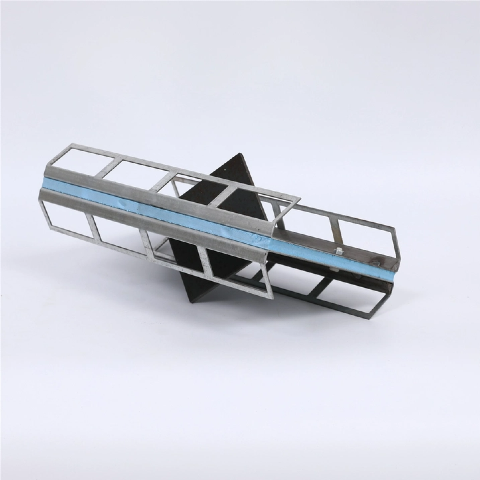
Once the floor is in service, the joint line becomes one of the hardest-working parts of the slab. Wheels cross it, debris rubs against it, and impact builds over time. A reinforced steel edge is far more capable of handling that kind of punishment than plain exposed concrete.
This protection helps preserve a smoother crossing and reduces early edge damage. It also lowers the chance that minor wear will turn into a maintenance problem too soon. In heavy-duty environments, that difference can directly affect uptime, floor condition, and overall operating efficiency.
Hard-wheeled traffic is especially demanding on concrete joints because it delivers sharper force into the edge. Forklifts, pallet trucks, and industrial equipment can quickly expose weak joint details. Floors that appear acceptable at the beginning may start showing edge damage much earlier than expected once traffic becomes constant.
An armor joint is designed to handle those conditions more effectively. The steel edge helps resist impact, while the transfer system supports a more stable crossing. Together, they help the floor last longer in settings where ordinary joint details often wear out too soon.
Some projects face a more demanding combination of slab movement, repeated traffic, and concentrated stress. In these cases, a more specialized solution may be needed. S-type Armor Joint is relevant where movement control and stronger edge protection both need attention.
The value of mentioning it here is simple. Once customers understand the basic working principle of an armor joint, they can better understand why different product forms exist. The principle remains the same, but the design can be adapted to suit tougher site conditions.
In some projects, the issue is not only protecting the joint edge but also maintaining dependable connection between adjacent concrete sections. That is where Concrete Connector products become important.
A concrete connector helps support continuity and load sharing between slab sections, especially where transition quality matters. For customers planning industrial floors or structural concrete zones, this means the joint discussion can go beyond edge protection alone. It becomes part of a broader performance solution that supports movement, strength, and connection together.
An armor joint works because it combines controlled movement, edge protection, and load transfer in one system. That combination helps concrete floors perform better under traffic, vibration, and long-term service conditions, especially in warehouses, industrial plants, and other heavy-use environments. Tianheng supports global customers with reliable production capacity, quality-focused manufacturing, and practical joint protection solutions for demanding projects. If your floor or structural concrete application needs stronger joint performance and longer service life, contact Tianheng for support and learn more about the right solution, including S-type Armor Joint.
Its main job is to protect the concrete joint edge while allowing controlled slab movement and supporting load transfer across the joint line.
It reinforces the area most likely to fail first, which helps reduce chipping, spalling, and rough crossings caused by repeated traffic.
It is widely used in warehouses, manufacturing plants, logistics centers, bridges, and other concrete areas exposed to heavy traffic or mechanical stress.
It should be considered when adjacent concrete sections need stronger connection and more reliable load continuity in addition to joint edge protection.


