

close
Choose Your Site
Global
Social Media
Views: 0 Author: Site Editor Publish Time: 2026-05-01 Origin: Site


Many buyers do not begin with a product name. They begin with a floor problem, an exposed edge, or a joint line that is likely to wear out too early under traffic. That is why understanding Armor Joint use helps customers identify the right project scenario faster. Tianheng, the official short name of Suzhou Tianheng Engineering Materials Co., Ltd., develops joint protection solutions for concrete areas that face frequent loading, edge damage risk, movement, and long-term service pressure.
Warehouses are one of the clearest application areas for armor joints because traffic is constant and the floor is under daily operational stress.
In logistics centers, forklifts and pallet trucks cross the same joint lines again and again. These crossings are not occasional. They are part of the daily workflow, especially in transfer aisles, storage lanes, and loading paths. Over time, repeated wheel impact can damage an unprotected slab edge and turn a small weakness into visible spalling and rough crossings.
Armor joints are used in these areas because they help protect the joint line where traffic pressure is highest. Instead of leaving the concrete edge exposed, the system strengthens the crossing area and supports more stable long-term performance.
A damaged joint does not only affect the slab. It also affects the way equipment moves across the floor. Rough crossings can increase vibration, reduce operating comfort, and add wear to internal traffic routes. In busy logistics facilities, that means more maintenance pressure and less efficient movement.
This is why armor joint use is so common in warehouse floors. The value is practical and easy to understand: better edge protection, smoother crossings, and a floor that stays usable for longer under repeated traffic.
Industrial floors often face a harder service environment than general commercial slabs. The issue is not only traffic volume, but also vibration, impact, and continuous mechanical wear.
Manufacturing plants usually contain handling equipment, production activity, and zones where concrete is exposed to repeated service pressure. Even when traffic is not constant in every area, the joint line may still take concentrated force from movement, equipment, or localized loading.
That is why ordinary joint details are often not enough in heavy industry. Armor joints are used because they reinforce the weak point of the slab and help the floor resist wear in environments where failure would be more costly and disruptive.
In industrial settings, repairs are rarely convenient. Shutdowns, maintenance planning, and production schedules all depend on the floor staying reliable. If a joint begins to break down early, the result is more than a cosmetic problem. It can create service interruptions and raise long-term repair costs.
For this reason, armor joint use in heavy industry is closely tied to service life. Buyers in these sectors are not only looking for an installed detail. They are looking for a joint solution that helps the floor keep working under heavy demands.
Site type | Main stress source | Why Armor Joint helps | Tianheng product family to mention |
Warehouse aisles | Repeated forklift crossings | Protects slab edges and improves crossing stability | Armor Joint |
Logistics hubs | Hard-wheel traffic and daily use | Reduces edge wear and spalling risk | S-type Armor Joint |
Manufacturing plants | Impact, vibration, mechanical stress | Supports stronger long-term joint performance | Armor Joint |
Exposed edge zones | Side impact and early edge damage | Strengthens vulnerable edge lines | Edge Protection Armor Joint |
Connected slab sections | Load sharing between concrete areas | Improves continuity and connection stability | Concrete Connector |
This application view helps readers connect the product to a real site condition instead of treating it like a generic construction part.
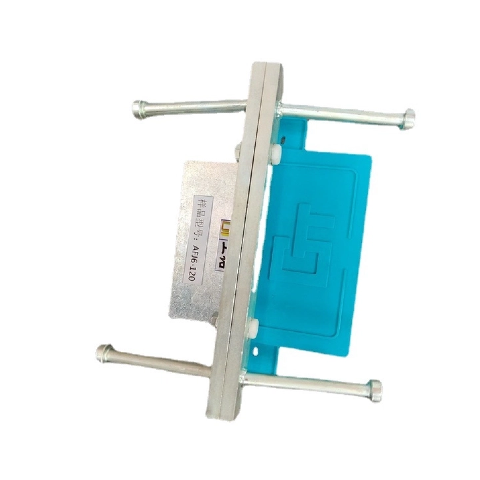
Armor joint use is not limited to indoor concrete floors. Outdoor and infrastructure-related areas also create strong demand for reinforced joint protection. Bridges, exposed slab sections, traffic-facing routes, and exterior concrete zones are all more vulnerable to a combination of movement, weather exposure, and surface wear.
In these environments, the joint line may experience temperature-related movement as well as repeated loading. Once the edge starts to fail, deterioration can spread faster because the slab is already working under exposed conditions. That is why armor joints are also relevant in bridges, road-facing concrete sections, and other external structures where durability matters over a long service cycle.
For project planners, this section of the application story is important because it shows that armor joints are not only for warehouses. They are also a practical solution for outdoor concrete areas where protection must begin early.
Some project areas are not defined by long traffic aisles but by local weak points. Column zones, perimeter edges, and slab connection areas often need more focused protection because stress becomes concentrated there.
When the exposed edge itself is the main concern, Edge Protection Armor Joint becomes the most relevant subtype to discuss. This applies to corner lines, slab boundaries, perimeter edges, and areas where the side of the concrete is likely to take impact or early wear.
These zones matter because the edge often shows failure earlier than the wider slab surface. If the edge deteriorates quickly, the whole area can look and perform worse long before the rest of the floor has a problem.
Column zones create a different type of application demand. Around these areas, the slab layout changes, traffic may turn sharply, and the risk of localized damage becomes higher. Column Wrap Armor Joint belongs in this part of the discussion because it supports more focused protection around these special areas.
Concrete Connector is relevant for another reason. Some projects need better load continuity and more stable connection between adjacent concrete sections. In those cases, the concern is not only protecting a visible edge, but also helping separate slab sections work together more reliably during service.
A project usually needs armor joint protection when the joint line is clearly one of the most vulnerable parts of the concrete design. Heavy traffic, repeated wheel crossing, visible edge damage risk, exposed outdoor service, localized stress near columns, and connected slabs that must share load are all strong signs. If the floor is likely to fail first at the joint rather than across the slab body, then armor joint protection should be considered early instead of waiting for later repairs.
The question of Armor Joint use is really a question of where concrete faces the greatest pressure. Warehouses, logistics centers, manufacturing plants, bridges, exposed slab edges, and connection zones all create conditions where ordinary joint details may not deliver enough long-term protection. Tianheng supports these demanding applications with product solutions designed around real service needs, helping customers match joint protection to the actual weak points of the project. If your floor or structural concrete area is exposed to repeated traffic, edge wear, movement, or local stress, it is worth discussing a more durable solution such as Edge Protection Armor Joint at the planning stage. Contact us for product details and application support.
It is most often used in warehouses, logistics centers, manufacturing plants, bridges, and other concrete areas exposed to repeated traffic, impact, or edge wear.
Because forklifts and pallet trucks cross the same joint lines every day, which places continuous stress on slab edges and increases the need for reinforced protection.
It should be considered when exposed slab edges, perimeter zones, or corner areas are likely to face early wear or side impact.
It helps improve connection stability and load continuity between adjacent concrete sections where shared performance matters.


