

close
Choose Your Site
Global
Social Media
Views: 0 Author: Site Editor Publish Time: 2026-04-22 Origin: Site


Most concrete floor problems begin quietly. The surface still looks sound, but the joint line starts wearing faster than the rest of the slab, and that early weakness often decides how the whole floor performs later. This Armor Joint guide is written to help readers look at the real job conditions behind joint failure and understand how Tianheng approaches joint protection for concrete floors that face traffic, movement, and long-term service demands.
A useful guide should begin with the floor itself. Many buyers first look at product names, models, or steel details, but that is not the best starting point. A joint performs well only when it matches the actual working conditions of the slab. Before any subtype is discussed, the first task is to identify what the floor must handle every day.
Traffic pattern affects a joint more than many people expect. A straight crossing lane is different from a turning zone. A storage aisle is different from a loading area. Some joints carry repeated traffic in the same direction, while others face constant turning, stopping, and shifting loads. These conditions change the way force hits the slab edge.
Wheel type is just as important. Soft wheels are more forgiving, but hard wheels produce sharper impact on the joint line. A floor that performs acceptably under light carts may show much earlier damage once forklifts or industrial equipment begin crossing the same joint day after day. This is why traffic analysis should come before product comparison. The joint detail is not only a construction item. It is part of the operating surface.
For that reason, Tianheng recommends looking at how vehicles move across the floor, where traffic concentrates, and whether crossings are light, frequent, or severe. These details help define whether the project needs a more standard protection solution or a stronger configuration with more attention to movement and load transfer.
Service environment also changes what the joint must do. A dry indoor warehouse does not place the same demands on the joint as an exposed loading yard or a floor that regularly faces moisture, cleaning chemicals, or temperature shifts. Even when the slab thickness is similar, the service condition may lead to a very different joint requirement.
Outdoor applications often face greater thermal movement and weather exposure. Wet areas may challenge long-term stability if drainage and maintenance are poor. Industrial environments may expose the slab to oils, cleaning agents, or repeated washing. These factors affect durability, corrosion risk, and the way the joint ages over time.
A practical guide should therefore ask simple questions early. Is the floor fully enclosed or partially exposed? Is it dry most of the time or regularly wet? Will the joint be crossed under clean conditions or in areas where debris and abrasive material collect? When these questions are answered first, the discussion becomes much more useful and much more relevant to the project.
Site condition | Why it matters | Product direction to discuss later |
Heavy straight traffic | Repeated crossing increases edge wear | Standard Armor Joint or higher-duty option |
Turning forklift area | Impact and side stress rise sharply | S-type Armor Joint |
Exposed slab edge | Edge damage risk becomes the main issue | Edge Protection Armor Joint |
Connected slab sections | Load sharing and continuity become critical | Concrete Connector |
Wet or outdoor service | Movement and durability demands increase | Stronger protection and careful installation |
This kind of review keeps the selection process practical. Instead of asking which product sounds strongest, the buyer starts asking which joint detail suits the floor best.
Even after the site condition is clear, a final decision should not be made too quickly. Several structural and service factors still need to be checked, because a joint that looks suitable in general may not perform well if the floor design is not taken into account.
Slab depth influences how the joint is built into the floor and how the slab behaves after pouring. It also affects how much support the edge needs once traffic begins. A shallow slab and a thick industrial slab may both require joint protection, but the final detail cannot always be approached in the same way.
Expected joint opening is another key point. Concrete shrinks as it cures, and slabs move with temperature. If the likely opening is not considered, the joint may not deliver the balance needed between movement allowance and crossing performance. A stronger product name alone does not solve that issue. The joint has to fit the floor design reality.
This is where a good guide becomes more than a list of items. It should help the reader connect product selection with how the slab will actually behave. That is also why project discussions with Tianheng usually begin from floor condition and slab demand instead of from a catalog code alone.
A joint should not be judged only by its initial purchase cost. What matters just as much is how it performs under service and what that means for future maintenance. If the joint does not transfer load well, the slab edge may break down earlier, traffic may become rougher, and repairs may appear much sooner than expected.
That creates a larger cost in practice. Repair work interrupts operations, damages floor appearance, and can even affect handling equipment if the crossing becomes uneven. A lower-cost joint detail may therefore become the more expensive choice over the life of the floor.
A better approach is to think in terms of performance value. Does the joint help reduce edge failure? Does it support smoother crossings? Does it help the floor stay operational for longer with fewer repairs? When buyers begin to think this way, the selection process becomes much more strategic and much closer to the real business value of the product.
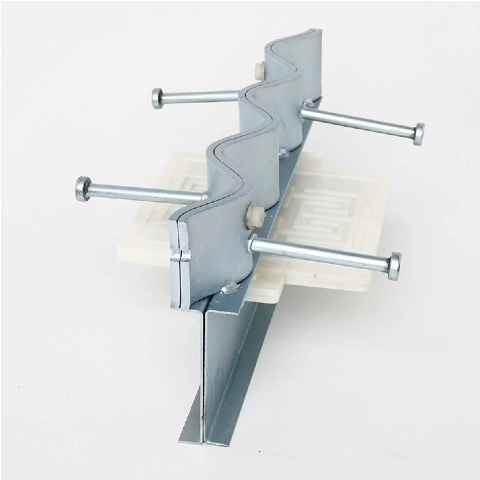
A practical guide should not overwhelm readers with too many names too early. Once the floor conditions are clear, however, it becomes easier to explain how different product directions fit different needs.
S-type Armor Joint is worth discussing when the floor faces a combination of movement, concentrated traffic, and higher stress at the joint line. It is not simply a different name. It is more relevant when standard joint protection may not be enough for the expected service condition.
This often applies to industrial floors where repeated crossing and slab behavior both matter. If the project has demanding traffic and the joint must keep performing under stronger mechanical stress, S-type can become an important option in the conversation.
Some projects are defined less by slab movement and more by exposed edge vulnerability. In these cases, the main concern is protecting the concrete edge from impact and early wear. That is where Edge Protection Armor Joint should enter the discussion.
This is especially relevant for exposed slab edges, traffic-prone edge lines, and areas where impact begins at the side of the concrete rather than at a typical internal crossing point. The purpose here is straightforward: protect the edge before it becomes the weak point of the entire floor zone.
Some floors need more than joint edge protection. They also require stable connection between adjacent concrete sections so that load sharing and structural continuity are better controlled. In these projects, Concrete Connector becomes part of the selection discussion.
This is important in areas where slab sections must work together more reliably and where transition quality affects long-term service. By including connector solutions in the guide, the buyer can see that the selection process is not limited to edge protection alone. It can also involve how the whole concrete floor system performs across connected sections.
Even the right joint detail can underperform if installation quality is weak. Good product selection and correct installation must work together.
Poor alignment at the start often turns into service problems later. If the joint is not level, traffic may strike the edge unevenly. If the layout line is inaccurate, the finished crossing may not behave as intended. These are not minor issues. On a busy floor, small installation errors can become clear operational problems.
That is why leveling and positioning should be treated as part of performance, not just part of assembly. A well-installed joint gives the slab a cleaner, more stable working line from the beginning.
Once the joint is placed, it must remain stable during pouring. Poor fixing may let the assembly shift. Weak concrete placement around the joint may leave the area less supported than expected. Poor vibration may reduce compaction and weaken the surrounding zone that should be holding the system firmly in place.
This means the final result depends not only on the steel section but also on the quality of the concrete work around it. A good guide should remind readers that installation discipline protects the value of the product itself.
A better joint decision gives the project a better service life. It helps reduce edge breakdown, improves traffic smoothness, and lowers the chance that early wear will turn into expensive maintenance. It also supports a stronger working environment for sites where floor reliability matters every day.
That benefit goes beyond the joint line itself. A floor with better joint performance is easier to keep in service, easier to maintain, and better suited to heavy-duty operation. For many buyers, this is the real reason the selection process matters. The goal is not simply to install a product. The goal is to protect the floor where it is most likely to fail.
This Armor Joint guide shows that the right solution is not the one that looks strongest on paper, but the one that matches traffic, exposure, slab movement, and connection needs in actual use. Tianheng supports this process by offering product directions that fit different concrete floor conditions, from general joint protection to more focused solutions for exposed edges and connected slab areas. If you are reviewing a floor design and want a joint system that suits the real service environment, contact us to discuss the best option, including Edge Protection Armor Joint for projects where slab edge durability matters most.
The first thing to review is the floor condition itself, especially traffic pattern, wheel type, and service environment. These factors shape the joint requirement before product names are considered.
Wheel type matters because hard wheels create sharper impact on the joint edge and usually cause faster wear. This can change the level of protection the floor needs.
S-type Armor Joint should be considered when the floor faces both movement demand and stronger mechanical stress at the joint line, especially in high-traffic industrial areas.
Installation quality matters because poor leveling, inaccurate layout, or weak concrete support can reduce the performance of even a well-chosen joint system.


